Best Induction Cooktops in India (2026): Budget to Feature-Rich, Compared
Induction cooktops solve a specific set of problems — no gas cylinder to arrange, faster heat-up than a flame, and a flat glass surface that’s genuinely easier to wipe clean than any gas stove. They’re common as a second cooktop in Indian kitchens, and increasingly a primary one in rented flats where a gas connection isn’t guaranteed.
The catch that trips up first-time buyers is cookware compatibility — induction only heats magnetic, flat-bottomed vessels, so your existing pots and pans might simply not work. I’ve covered that in the buying guide below, along with four cooktops spanning entry-level to a more premium Philips model, all genuinely popular rather than picked for spec-sheet numbers alone.
None of these need installation — plug in, place a compatible pan, and you’re cooking within seconds.
How to pick the right induction cooktop
Four things to check before buying, cookware included.
- Check your cookware is induction-compatible before assuming it’ll just work. Induction needs magnetic, flat-bottomed vessels — cast iron and most stainless steel work, aluminium and copper-bottomed pots without a steel base generally don’t. A simple magnet test on the base of your existing pans tells you instantly.
- Wattage affects cooking speed more than “power” in the abstract. Higher wattage (1800-2100W, like the Philips and Pigeon models here) heats and boils faster; lower wattage (1200-1600W) is gentler and often has more finely tuned preset modes for simmering and slow cooking.
- Preset cooking modes are genuinely useful, not just marketing. Presets for rice, curry, milk-boiling and more auto-adjust power and timing — handy for anyone who doesn’t want to babysit the exact heat level throughout cooking.
- Surge protection matters given India’s variable power supply. Look for surge protection specs (like the 4KV rating on one model here) and automatic voltage regulation — induction cooktops are more electronics-sensitive than a simple gas burner.
The best induction cooktops you can buy right now
Pigeon Cruise 1800W — the most-bought all-rounder
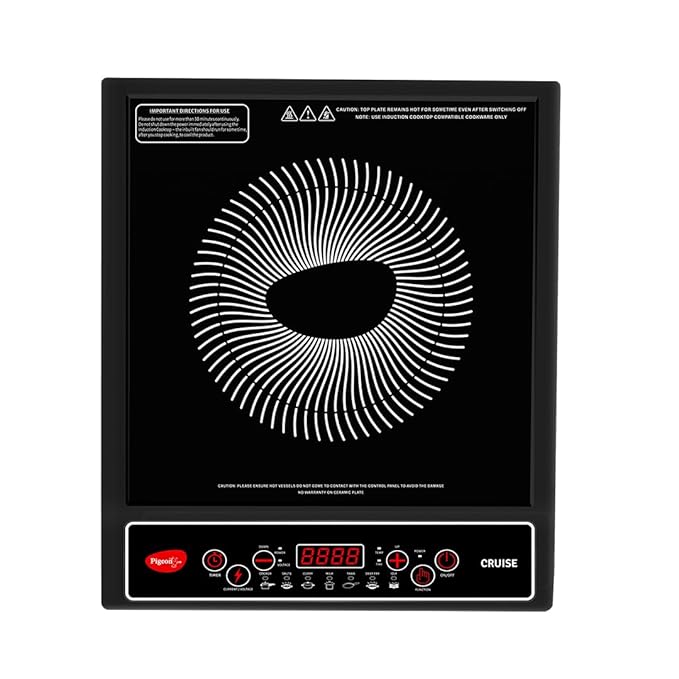
This is the induction cooktop that shows up again and again in Indian kitchens, and the review count reflects it — it’s a genuinely popular, dependable choice. 1800W gives it enough power to boil and cook quickly, and the crystal glass top is easy to wipe down after daily use.
It doesn’t try to overload you with dozens of preset modes — just a straightforward, powerful cooktop that gets the basics right, which is exactly what most buyers are actually looking for in a second or backup cooktop.
Best for: Anyone wanting a reliable, high-wattage induction cooktop without overthinking the purchase.
- 👍 High 1800W output for fast cooking
- 👍 Extremely popular with a large, proven track record
- 👍 Crystal glass top wipes clean easily
- 👍 Straightforward controls, nothing overcomplicated
- 👎 Fewer specialised preset modes than higher-end models
- 👎 Basic build compared to premium alternatives
- 👎 Like all induction cooktops, needs magnetic flat-bottomed cookware
Prestige PIC 20 1600W — the surge-protected mid-ranger
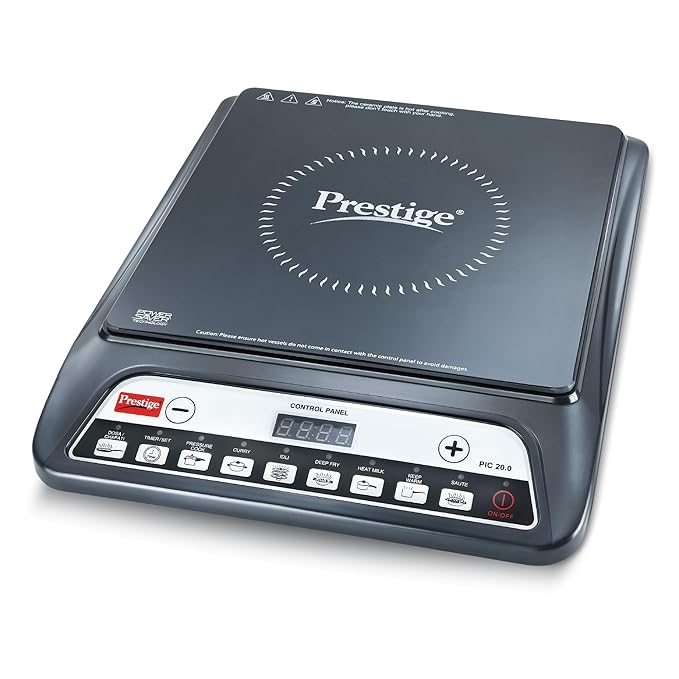
Prestige’s PIC 20 leans into a genuinely useful feature many buyers overlook — 4KV surge protection, which matters if your area gets voltage spikes or unstable supply that could otherwise damage the cooktop’s electronics over time. 1600W is a sensible middle ground between fast cooking and gentler simmering control.
It comes with a solid range of preset cooking modes, which is where Prestige’s induction line has traditionally focused its engineering effort compared to competitors that prioritise raw wattage instead.
Best for: Households in areas with variable or unreliable power supply.
- 👍 4KV surge protection genuinely useful for unstable power areas
- 👍 Good balance of wattage for both fast cooking and simmering
- 👍 Multiple preset cooking modes
- 👍 Trusted, well-established Indian kitchen brand
- 👎 Lower wattage than the Pigeon or Philips options for pure boiling speed
- 👎 Preset modes take some learning to use effectively
- 👎 Mid-range pricing sits between the cheaper Pigeon and premium Philips
Philips Viva Collection HD4928 — the premium fast-cooking pick
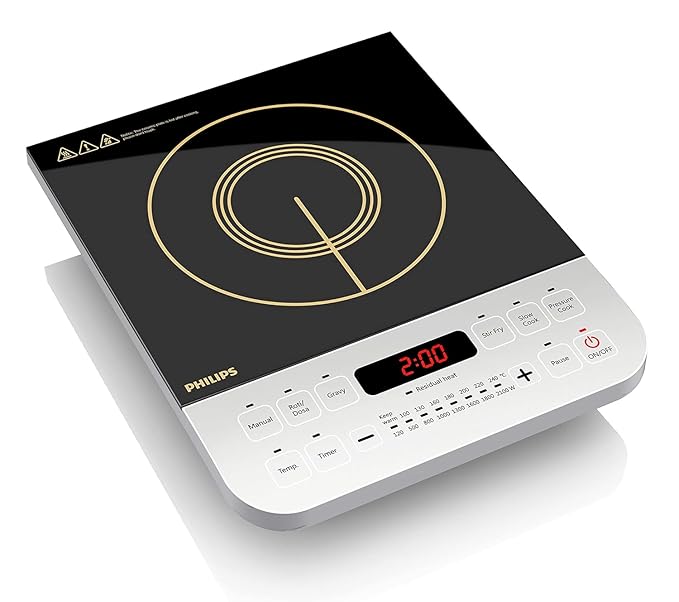
At 2100W, this is the most powerful cooktop in this list, and Philips markets it around genuinely fast, near gas-flame-speed cooking — a real advantage if speed is your priority over gentle simmering. It’s priced at the premium end of this roundup, reflecting both the higher wattage and the Philips brand name.
Build quality and finish are a step up from the budget options, which matters if the cooktop will sit visibly on your kitchen counter daily rather than being tucked away as an occasional-use backup.
Best for: Buyers who want the fastest cooking and don’t mind paying a premium for a trusted global brand.
- 👍 Highest wattage here for genuinely fast cooking
- 👍 Premium build quality and finish
- 👍 Trusted global brand with wide service reach
- 👍 Marketed specifically around gas-flame-comparable cooking speed
- 👎 The most expensive option in this roundup
- 👎 High wattage can be less forgiving for delicate, slow-simmer dishes
- 👎 Premium pricing may not suit those wanting a basic backup cooktop
Prestige IRIS ECO 1200W — the efficient low-wattage option
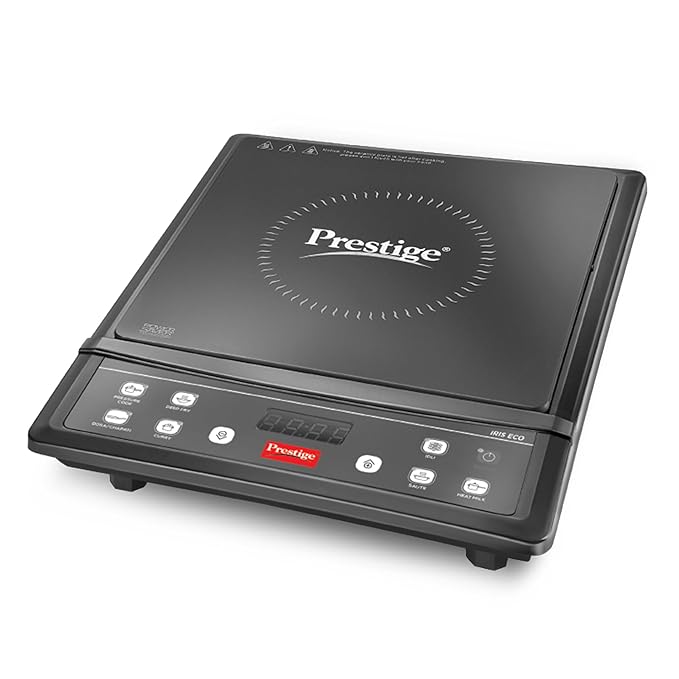
Not every kitchen needs maximum wattage — this Prestige model runs at a gentler 1200W with an automatic voltage regulator, making it a sensible pick for households that do more simmering and slow-cooking than rapid boiling, or simply want to keep electricity draw modest.
The lower wattage also means it’s gentler on your home’s electrical circuit if you’re running it alongside other appliances, which is a genuinely practical consideration in smaller kitchens or older wiring setups.
Best for: Smaller households, simmer-heavy cooking, or anyone prioritising lower power consumption.
- 👍 Automatic voltage regulator adds protection against fluctuations
- 👍 Lower power draw suits smaller kitchens and circuits
- 👍 Well-suited to simmering and slow-cooking dishes
- 👍 Compact and budget-friendly
- 👎 Noticeably slower for boiling or high-heat cooking than the 1800-2100W options
- 👎 Not ideal if fast cooking is your main priority
- 👎 Lower wattage limits it for larger-volume cooking
Frequently Asked Questions
Will my existing cookware work on an induction cooktop?
Only if it’s magnetic and flat-bottomed — cast iron and most stainless steel pans generally work, while aluminium and copper-bottomed cookware without a steel base usually don’t. A simple test: if a magnet sticks firmly to the base of your pan, it should work on any of these cooktops.
What wattage induction cooktop do I need?
For fast boiling and high-heat cooking, higher wattage like the Philips Viva’s 2100W or the Pigeon Cruise’s 1800W works best. For simmering, slow-cooking, or smaller households, a lower-wattage model like the Prestige IRIS ECO at 1200W is gentler and uses less electricity.
Is surge protection important for an induction cooktop in India?
Yes, especially in areas with unstable power supply — induction cooktops are more electronics-sensitive than a gas stove. The Prestige PIC 20’s 4KV surge protection and the IRIS ECO’s automatic voltage regulator both guard against damage from voltage spikes.
Can an induction cooktop fully replace a gas stove?
For most everyday cooking, yes — but it depends entirely on using induction-compatible cookware, and very high-heat techniques like wok-style stir-frying can feel different without an open flame. Many Indian households keep both rather than fully replacing one with the other.
Are preset cooking modes on induction cooktops actually useful?
Genuinely, yes — presets for rice, milk, curry and more auto-adjust power and timing so you don’t need to babysit exact heat levels. The Prestige PIC 20 in particular leans on a solid set of these presets as a core feature.
Which induction cooktop is best for daily heavy use?
The Pigeon Cruise 1800W is the most widely bought and reviewed option here, suggesting strong real-world reliability for daily use. If budget allows, the Philips Viva‘s premium build is designed for that same daily-use durability at a higher price point.
The bottom line
For most kitchens, the Pigeon Cruise 1800W is the safe, popular, high-power choice. If unstable power supply is a concern, the Prestige PIC 20‘s surge protection earns its keep. Want the fastest cooking and don’t mind paying for it — go Philips Viva Collection. And for simmer-heavy cooking or a smaller kitchen circuit, the Prestige IRIS ECO is the sensible lower-wattage pick.
As an Amazon Associate we earn from qualifying purchases — at no extra cost to you. We don’t print prices or ratings here because they change daily; tap through to Amazon for the current price and latest reviews.