Best Mixer Grinders for the Kitchen in India: Bajaj, Philips and What Wattage Means
A mixer grinder is the single most-used appliance in an Indian kitchen, and also the one bought with the least thought – most people grab whatever’s in the 500-750 watt range with the most jars and move on. That’s not entirely wrong, but it misses the two things that actually determine whether the appliance lasts five years or eighteen months: motor quality and jar material.
Wattage is the number everyone fixates on and it matters less than assumed. A well-built 500 watt motor with good gearing will out-grind a poorly built 750 watt one, and it’ll do it for longer before the motor burns out. What actually separates a good mixer grinder from a mediocre one is copper winding in the motor, stainless steel jars rather than thin ones that dent, and a coupler that doesn’t strip after a year of dense batters.
I’ve picked five that cover the range from an entry-level jar set to a proper multi-appliance system, plus a wet grinder for genuine idli-dosa batter, which a mixer grinder handles poorly no matter the wattage.
What wattage actually buys you, and other things the box doesn’t explain
Five things worth understanding before wattage.
- Wattage is a starting point, not the whole story. 500W handles everyday chutneys, masalas and batters fine. 750W and above helps with dense, high-volume grinding – large batches, hard spices, thick dals – and copes better with continuous use without overheating. But a well-engineered 500W motor with proper copper winding beats a cheaply built 750W one every time.
- Stainless steel jars, not thin aluminium-coated ones. Good jars are heavier, don’t dent, don’t discolour from turmeric and chilli over time, and grip the base properly so they don’t wobble mid-grind. Pick a jar up and feel the weight – a genuinely thin, light jar is a warning sign regardless of the brand on the box.
- The coupler is the part that actually fails. That small plastic or nylon piece connecting the jar to the motor is the single most common failure point in Indian kitchens – it strips from grinding dense, high-resistance batters. Buying spares of just the coupler is common and cheap; it’s worth knowing this before you’re stuck mid-recipe.
- A mixer grinder will never make proper idli-dosa batter like a wet grinder does. Wet grinders use stone grinding at low speed over time, which aerates rice-dal batter in a way no rotating-blade mixer can replicate. If you make idli and dosa batter regularly and the texture matters to you, a dedicated wet grinder is worth the separate purchase.
- More jars sounds better and often isn’t. A five-jar set frequently includes a jar you’ll use twice a year. Look at what the jars are actually sized for – a proper large jar for chutneys and batters, a smaller one for dry grinding spices – rather than counting jars as the main spec.
The best mixer grinders you can buy right now
Philips HL7756 – the most trusted mixer grinder in Indian kitchens
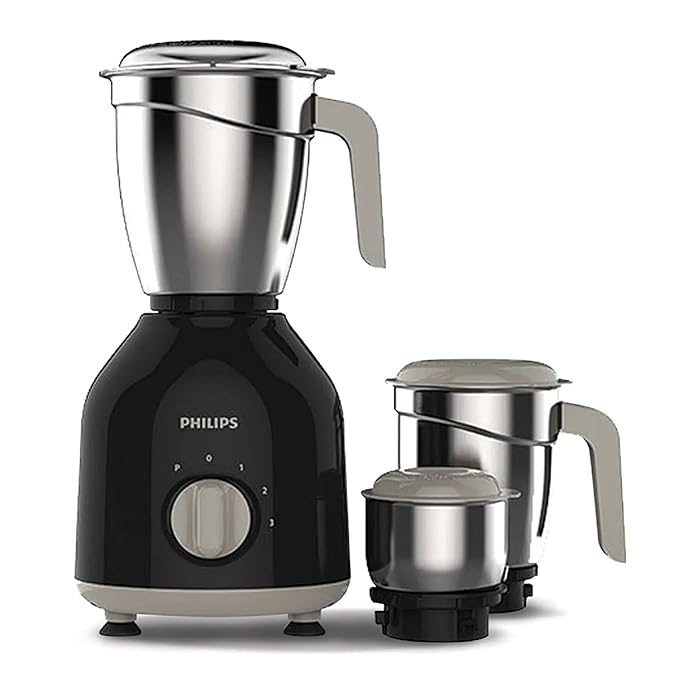
This has an enormous accumulated base of Indian owner feedback – the largest of any single mixer grinder in this roundup – and that kind of volume sustained over years is the best quality signal available in this category. Philips builds these with a motor that copes well with continuous, everyday grinding without the coupler strip issues cheaper brands are known for.
750W handles thick batters and dense masalas comfortably, and the three stainless steel jars cover everyday chutneys, batter and dry grinding. This is the safe, well-proven default for most Indian kitchens.
Best for: Most households. A dependable everyday mixer that lasts.
- 👍 Largest base of Indian owner feedback of any mixer grinder here
- 👍 750W copes well with thick batters and dense grinding
- 👍 Stainless steel jars resist denting and staining
- 👍 Philips’ motor and coupler durability are well regarded
- 👍 Suitable for daily heavy use
- 👎 Costs more than the Bajaj and Lifelong options
- 👎 Bulkier on the counter than smaller 500W models
- 👎 Not the cheapest way to a full jar set
- 👎 No juicer attachment included
Bajaj GX-1 – the value default that sells in huge numbers
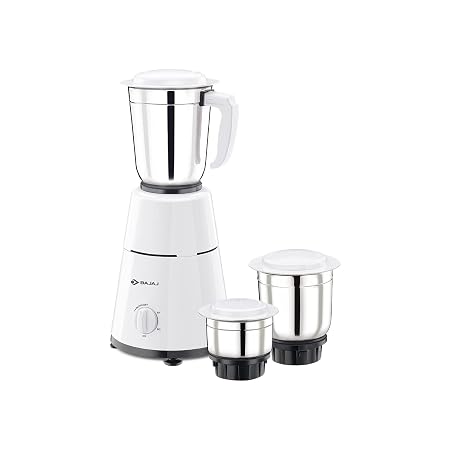
Bajaj has been the default Indian mixer grinder brand for decades, and the GX-1 is the entry point that sells in enormous volume – a very large base of owner feedback confirms it’s a known quantity rather than a gamble. 500W handles the everyday grinding most households actually do.
It’s not trying to be sophisticated, and it doesn’t need to be. Three jars cover chutney, batter and dry grinding, spares are available at essentially any appliance shop in the country, and the price makes it an easy first purchase or straightforward replacement.
Best for: A first mixer grinder, a rental kitchen, or a straightforward budget replacement.
- 👍 Very large base of Indian owner feedback
- 👍 Cheap and widely serviced across the country
- 👍 500W is enough for everyday chutneys, batters and masalas
- 👍 Spares readily available at any local shop
- 👍 Straightforward, no-frills reliability
- 👎 500W struggles with very dense batters or continuous heavy use
- 👎 Basic build quality compared to the Philips
- 👎 Jars are lighter and less durable long-term
- 👎 No advanced features like pulse control variants
Bajaj Military Series Rex 750W – the more serious Bajaj
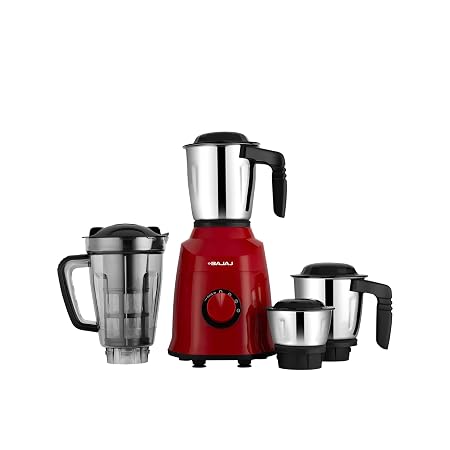
This steps up from the entry-level GX-1 with a 750W motor and a fourth jar, aimed at households that grind more frequently or in larger batches. The Military Series branding points at tougher build testing, which shows up in a motor that handles sustained use better than the base GX-1.
It’s a sensible middle ground between the cheap GX-1 and the pricier Philips – more capable than the entry Bajaj, still meaningfully cheaper than the Philips, with the same widely available spares and service that make Bajaj easy to live with long-term.
Best for: Households wanting Bajaj’s reliability with more power and jar variety.
- 👍 750W motor handles denser grinding than the GX-1
- 👍 Four jars cover a wider range of everyday tasks
- 👍 Bajaj’s widespread spares and service availability
- 👍 Sensible middle price point
- 👍 Tougher build testing under the Military Series branding
- 👎 Smaller owner feedback base than the established GX-1
- 👎 Still cheaper-feeling build than the Philips
- 👎 Not as proven long-term as Bajaj’s older models
- 👎 Extra jar is not always the size you actually need
Lifelong Power Pro – the lightest on the wallet
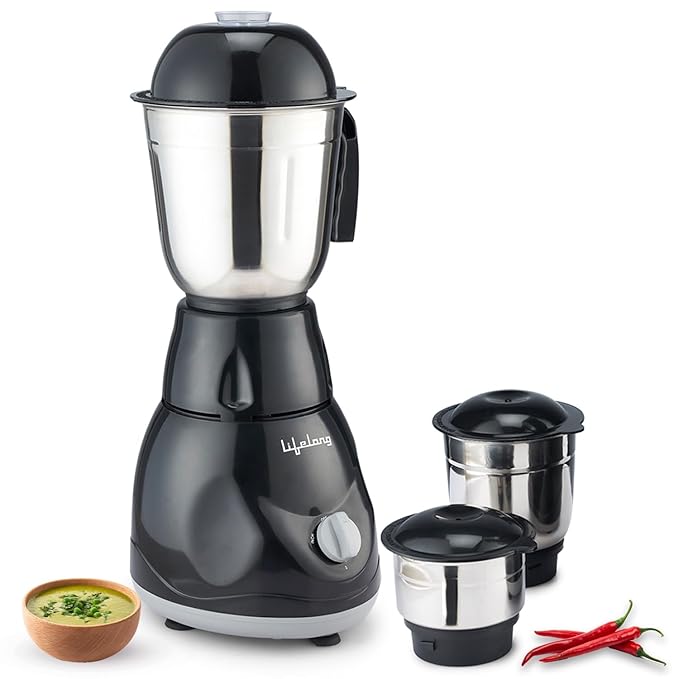
Lifelong has built a genuinely large following in India’s budget appliance space, and this mixer grinder has one of the largest owner feedback bases in this entire roundup – more buyers than either Bajaj option, in fact, at a price below both.
500W and three jars cover the basics competently. It’s an honest budget appliance rather than a refined one – expect a shorter working life than the Philips or the Bajaj Military Series, and treat it accordingly for a rental kitchen, a hostel, or a genuinely fixed budget.
Best for: The tightest budget, or a backup mixer for a second kitchen.
- 👍 One of the largest owner feedback bases in this roundup
- 👍 Lowest price of the mixer grinders here
- 👍 Covers everyday chutney and batter grinding competently
- 👍 Good for a rental kitchen or as a backup unit
- 👎 Shorter expected working life than Philips or Bajaj Military Series
- 👎 500W struggles with dense or continuous grinding
- 👎 Build materials are basic
- 👎 Jars are lighter and less durable over years of use
NutriPro Juicer Mixer Grinder – the multi-function pick
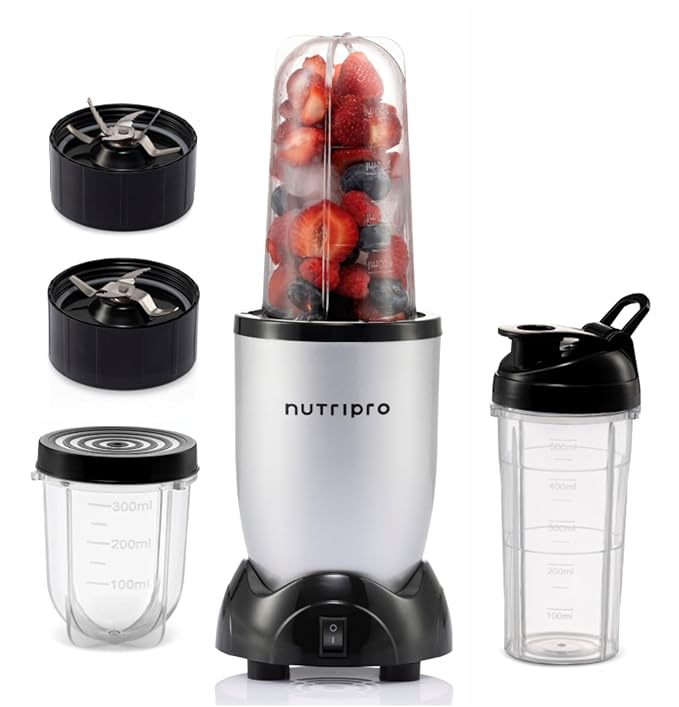
This is the highest-rated appliance in this entire roundup, and it earns it by doing more than a standard mixer grinder – proper juicing and smoothie functions alongside the usual chutney and batter grinding, in one machine rather than two separate appliances taking up counter space.
If your kitchen actually uses fresh juice and smoothies regularly, this replaces a dedicated juicer as well as a basic mixer. For households that only ever do traditional Indian grinding, a dedicated mixer grinder like the Philips or Bajaj is the more focused tool.
Best for: Households that want juicing and smoothie-making alongside regular grinding.
- 👍 Highest owner rating of any appliance in this roundup
- 👍 Combines juicing and smoothie functions with standard grinding
- 👍 Saves counter space versus buying a separate juicer
- 👍 Large accumulated base of owner feedback
- 👍 Good value for the combined functionality
- 👎 Not a specialist for traditional Indian batter grinding
- 👎 500W is on the lower end for very dense grinding tasks
- 👎 Juicing attachment adds cleaning steps versus a plain mixer
- 👎 Overkill if you never juice
Butterfly Smart Wet Grinder – for genuine idli-dosa batter
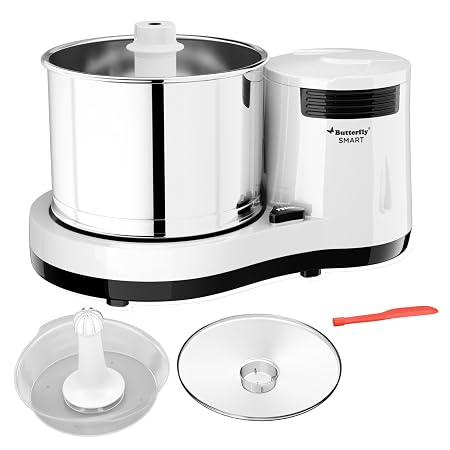
No mixer grinder, however powerful, replicates what a proper wet grinder does. The slow stone-grinding action aerates rice and urad dal batter over time, producing a lighter, fluffier idli and a crisper dosa than a fast-rotating blade ever manages. If that texture matters to your household, this is the appliance that delivers it.
It’s a genuinely well-regarded model with strong owner feedback, and it’s a specialist purchase alongside your mixer grinder rather than a replacement for one – you’ll still want a regular mixer for chutneys, masalas and everything else.
Best for: Households that make idli and dosa batter regularly and care about the texture.
- 👍 Delivers genuinely better idli-dosa batter texture than any mixer
- 👍 Strong owner ratings
- 👍 Traditional stone-grinding action, well proven for South Indian cooking
- 👍 Purpose-built rather than a compromise attachment
- 👎 Only useful for batter grinding, not a general mixer replacement
- 👎 Takes up separate counter space
- 👎 Slower process than a quick mixer grind
- 👎 Extra appliance to buy alongside a regular mixer grinder
Frequently Asked Questions
Which mixer grinder should most people buy?
The Philips HL7756 for most households – it has the largest base of Indian owner feedback of any mixer grinder, and its motor and jar quality hold up well over years of daily use.
Does higher wattage mean a better mixer grinder?
Not necessarily. 500W handles everyday grinding fine, and a well-built 500W motor with proper copper winding will outlast a cheaply built 750W one. Wattage helps most with dense batters and continuous heavy use, not general quality.
Why does the coupler keep breaking on my mixer grinder?
It’s the single most common failure point in this category – dense, high-resistance batters strip the small plastic or nylon coupler connecting the jar to the motor. Replacement couplers are cheap and widely available; it’s not usually a sign the whole appliance is failing.
Can a mixer grinder make proper idli and dosa batter?
Not as well as a dedicated wet grinder like the Butterfly Smart. Wet grinders use slow stone-grinding action that aerates the batter, producing a lighter idli and crisper dosa than a fast rotating blade can replicate.
How do I know if a jar is good quality?
Pick it up. A genuinely good stainless steel jar has real weight to it and won’t dent easily. A thin, light jar – regardless of the brand printed on the box – is a warning sign for durability and turmeric staining.
Is a juicer mixer grinder worth it over a plain mixer?
Only if you’ll actually use the juicing function regularly. The NutriPro is the best-rated appliance in this roundup and saves counter space if you juice often, but a dedicated mixer like the Philips or Bajaj is more focused for households that mainly do traditional Indian grinding.
The bottom line
For most kitchens, the Philips HL7756 is the dependable default with the largest track record behind it. On a tight budget, the Bajaj GX-1 is the classic, widely serviced choice, and the Bajaj Military Series Rex is worth the step up if you grind more heavily. The Lifelong Power Pro is the cheapest option here. If you juice regularly, the NutriPro is genuinely the best-rated appliance in this list. And if idli-dosa batter texture actually matters to your household, add a Butterfly wet grinder alongside whichever mixer you choose.
As an Amazon Associate we earn from qualifying purchases — at no extra cost to you. We don’t print prices or ratings here because they change daily; tap through to Amazon for the current price and latest reviews.