Best Redmi 5G Phones in India: The Whole Ladder, Honestly Ranked
Redmi has been the default answer to “which budget phone should I buy” in India for the better part of a decade, and the current 5G lineup is the widest it’s ever been. That’s the problem. There are five rungs on the ladder between roughly ₹14,000 and ₹35,000, the model names barely distinguish themselves, and two of those rungs are genuinely not worth the money.
I went through the whole current range and ranked it honestly, including being blunt about the one everyone buys that I’d steer you away from. The short version: the value has moved up the ladder. The cheapest Redmi 5G phones have gotten worse relative to their competition, while the middle of the range has gotten genuinely good.
If you’re cross-shopping brands rather than committed to Redmi, our vivo 5G roundup covers the other half of this segment.
Where the Redmi ladder is worth climbing – and where it isn’t
Four things that decide which Redmi is right for you.
- HyperOS still shows ads and ships with bloat. Budget twenty minutes to fix it. This is the single most consistent complaint about Redmi phones in India and it’s a fair one. Out of the box you’ll see promoted content in system apps and a pile of preinstalled apps. Most of it can be turned off in settings and uninstalled – do it on day one and the software experience is genuinely fine after that.
- Don’t buy 4 GB of RAM in 2026 unless the phone is for a light user. WhatsApp, a browser and one social app will fill it. The step from 4 GB to 6 or 8 GB is the single upgrade that most changes how a phone feels two years in, and it costs far less than any other meaningful spec jump.
- OIS is the camera spec that matters, not megapixels. A 200MP sensor without stabilisation takes worse photos in a dim restaurant than a 50MP one with it. Only the Note 15 models here have optical stabilisation, and that’s the real dividing line in this lineup – not the resolution numbers on the box.
- Xiaomi’s service network is a genuine advantage, but check it locally. Xiaomi has one of the widest authorised service footprints in India, which is a real reason to buy Redmi over an online-only brand. It’s still worth confirming there’s a centre in your city before you commit.
The best Redmi 5G phones you can buy right now
Redmi 15 5G – the sweet spot in the whole range
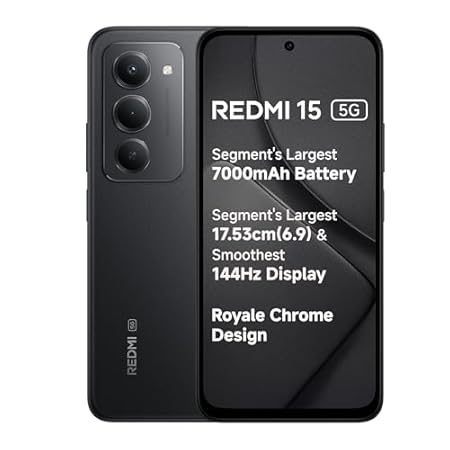
This is where I’d stop on the ladder. The 7000mAh battery is the largest in the segment and it fundamentally changes the phone – two days of ordinary use, a full day of navigation and hotspot without hunting for a charger. Paired with 6 GB of RAM and 128 GB of storage, you get a phone that will still feel fine in two years.
It’s also the point where owner satisfaction clearly improves over the cheaper Redmi models. You’re not getting a flagship camera or a fast chip, but nothing here feels compromised, and that’s more than can be said for the two rungs below it.
Best for: Most buyers. The best combination of battery, RAM and price Redmi currently offers.
- 👍 Largest battery in this lineup – genuinely a two-day phone
- 👍 6 GB RAM and 128 GB storage is a sensible long-term combination
- 👍 Clearly better received by owners than the cheaper Redmi models
- 👍 Priced well below the Note series for most of the practical benefit
- 👍 Wide Xiaomi service coverage
- 👎 No optical image stabilisation, so low-light photos are ordinary
- 👎 Mid-tier chipset – fine for daily use, not for serious gaming
- 👎 Heavier than the smaller Redmi models because of the battery
- 👎 HyperOS ads and bloat still need clearing on setup
Redmi Note 15 5G – the camera pick that’s worth the jump
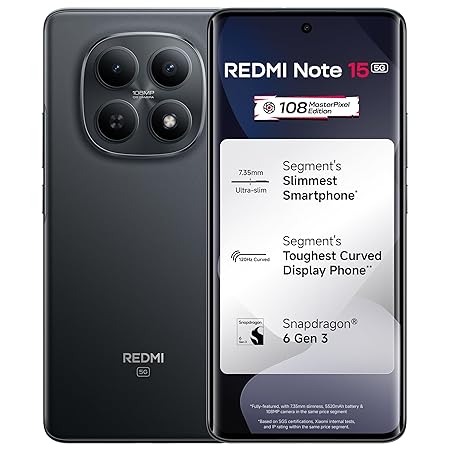
The Note series has always been where Redmi puts the good camera, and the meaningful upgrade here isn’t the 108MP number, it’s the optical stabilisation behind it. That’s what lets you shoot a restaurant table or an evening street without everything smearing – the exact situation where cheaper phones fall apart.
8 GB of RAM and 256 GB of storage is the other reason to step up. If you keep phones for three or four years, shoot a lot of video, or just hate managing storage, this is the rung that stops the problem before it starts. It’s a substantial price jump from the Redmi 15, and it’s justified only if the camera and storage are things you’ll genuinely use.
Best for: Anyone who takes photos in dim light, or wants storage they won’t outgrow.
- 👍 Optical image stabilisation – the camera upgrade that actually matters
- 👍 8 GB RAM and 256 GB storage removes long-term storage anxiety
- 👍 Best-received phone in the Redmi Note lineup right now
- 👍 Meaningfully faster than the cheaper Redmi models
- 👍 Good display and build for the price
- 👎 Big price jump over the Redmi 15 for benefits not everyone needs
- 👎 Battery is smaller than the Redmi 15’s
- 👎 Still HyperOS, with the same setup cleanup required
- 👎 At this price you’re into cross-shopping territory with other brands
REDMI Note 15 Pro 5G – the top rung, and the hardest to justify
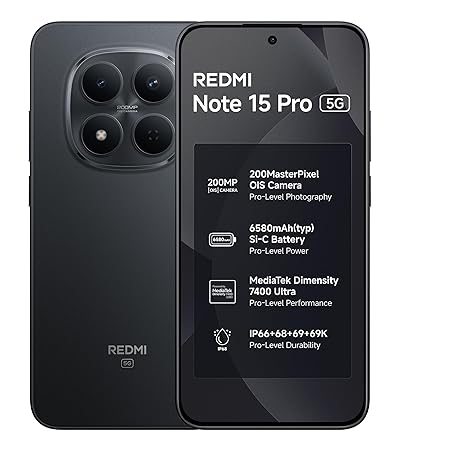
The 200MP main sensor with stabilisation is real, and in good light the detail it pulls out is genuinely impressive – you can crop hard into a photo and still have something usable. That’s the case for this phone.
The case against it is the price. It sits close enough to more established mid-range phones from other brands that you’d be right to cross-shop, and owner feedback so far is a step below the standard Note 15’s. If the 200MP sensor is specifically what you want, buy it. If you were just climbing the ladder to the top because that’s what people do, stop one rung lower.
Best for: Buyers who specifically want the biggest sensor Redmi sells and will actually use it.
- 👍 200MP main sensor with OIS pulls genuine detail in good light
- 👍 8 GB RAM and 256 GB storage
- 👍 Best specification sheet in Redmi’s 5G range
- 👍 Premium build and display for the series
- 👎 Most expensive Redmi here, and priced into competitive territory
- 👎 Owner feedback so far is weaker than the standard Note 15’s
- 👎 200MP is far less useful in low light than the marketing implies
- 👎 Not a clear enough upgrade over the Note 15 to justify the gap for most people
REDMI 15C 5G – the budget option, with real caveats
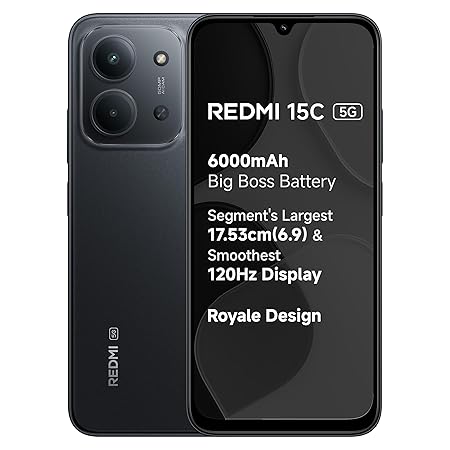
This is the sub-₹20,000 rung, and it’s fine rather than good. You get a large battery, a big display and 128 GB of storage, which is a reasonable package for someone whose phone life is WhatsApp, YouTube, UPI and calls.
The problem is the 4 GB of RAM. It works today; it will feel slow within eighteen months as apps get heavier and background reloading becomes constant. If you can stretch to the Redmi 15 with its 6 GB, do that instead – the price gap is smaller than the difference it makes.
Best for: Light users who want a large battery and a big screen more than they want speed.
- 👍 Large battery and big display for the price
- 👍 128 GB of storage, which is generous at this level
- 👍 Perfectly capable for calls, messaging and video
- 👍 Cheap entry into a Redmi 5G phone
- 👎 4 GB RAM will feel slow within eighteen months of ordinary use
- 👎 Noticeably weaker owner reception than the Redmi 15 above it
- 👎 Camera is basic, especially indoors
- 👎 The Redmi 15 is a better buy for a modest amount more
REDMI A7 Pro 5G – sells in huge numbers, and I’d still skip it
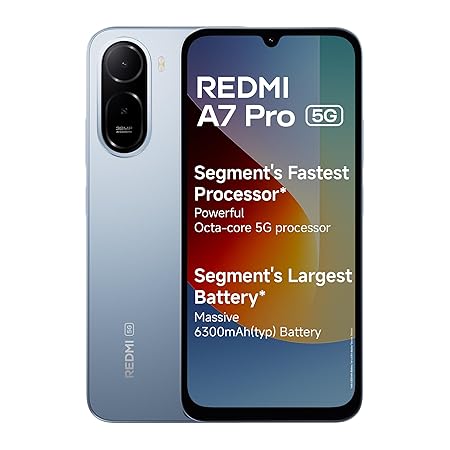
I’m including this because it sells in genuinely enormous volumes and you’ll see it recommended everywhere, and I’d rather explain why I don’t rate it than pretend it doesn’t exist. It’s the cheapest way into a 5G Redmi, and that’s the whole argument for it.
It’s also the weakest-received phone in this entire roundup by a clear margin, and the reasons show up in daily use: 4 GB of RAM and only 64 GB of storage, a display and camera that are basic even at this price, and performance that struggles once you have a few apps installed. If it’s a backup phone or a first phone for a very light user, fine. As your main phone, the Redmi 15 is worth saving up for.
Best for: A backup phone, or an ultra-tight budget where nothing else fits.
- 👍 Cheapest route into a 5G Redmi phone
- 👍 Sells in very large volumes, so spares and service are easy
- 👍 Fine for calls, WhatsApp and UPI
- 👍 Reasonable as a backup or secondary phone
- 👎 The weakest-received phone in this roundup by a clear margin
- 👎 Only 64 GB of storage – you’ll be managing space from month one
- 👎 4 GB RAM makes multitasking sluggish
- 👎 Basic display and camera even by budget standards
- 👎 The Redmi 15 is a substantially better phone for a modest step up
Frequently Asked Questions
Which Redmi 5G phone is the best buy right now?
The Redmi 15 5G. Its 7000mAh battery, 6 GB of RAM and 128 GB of storage make it the best-balanced phone in the range, and it’s clearly better received than the cheaper models below it.
Is the Redmi Note 15 Pro worth the extra over the Note 15?
For most people, no. The Note 15 already has optical stabilisation and the same RAM and storage. The Pro’s 200MP sensor is genuinely good in daylight, but the price jump puts it into competition with stronger phones from other brands.
Do Redmi phones still show ads?
Yes, HyperOS still shows promoted content in some system apps and ships with preinstalled bloatware. Almost all of it can be disabled in settings and uninstalled. It’s a one-time twenty-minute cleanup, but it is annoying that it’s needed.
Is 4 GB RAM enough on a Redmi phone?
Not really, not any more. It works on day one but gets noticeably sluggish within a year or two as apps grow. Both the 15C 5G and A7 Pro 5G here have 4 GB – stretching to the Redmi 15 5G with 6 GB is money well spent.
Which Redmi has the best camera?
The Note 15 Pro 5G on paper with its 200MP sensor, but the Note 15 5G is the smarter buy – it has the optical stabilisation that actually determines whether low-light photos come out usable.
Which Redmi phone has the best battery life?
The Redmi 15 5G, with a 7000mAh battery that’s comfortably the largest here. It’s a genuine two-day phone for normal use.
The bottom line
Buy the Redmi 15 5G. It has the biggest battery, enough RAM to age well, and it’s where owner satisfaction clearly turns the corner in this lineup. If you photograph a lot in dim light or want storage you’ll never outgrow, the Redmi Note 15 5G is a worthwhile step up for its optical stabilisation. The Note 15 Pro only makes sense if you specifically want that 200MP sensor, and I’d steer clear of the 15C and especially the A7 Pro unless the budget genuinely leaves no other option.
As an Amazon Associate we earn from qualifying purchases — at no extra cost to you. We don’t print prices or ratings here because they change daily; tap through to Amazon for the current price and latest reviews.