Best Cookware in India (2026): Tawas, Kadais & Cookware Sets Compared
Indian cooking runs on three or four pieces of cookware doing 90% of the work — a tawa for rotis and dosas, a kadai for curries and frying, and maybe a proper multi-piece set if you’re setting up a kitchen from scratch. Which material you pick for each matters more than the brand name on the box.
This roundup covers exactly that spread — two cast iron tawas from different brands worth comparing directly, a non-stick kadai for everyday frying, and a stainless steel cookware set for anyone building out a full kitchen. Material trade-offs (seasoning, weight, heat retention, cleaning effort) are covered in the buying guide, because that’s genuinely more useful than comparing brand logos.
None of these are dishwasher-friendly non-stick gimmicks — they’re the kind of cookware that, looked after properly, lasts a decade or more.
How to pick the right cookware material
Four things that matter more than which brand’s name is stamped on the pan.
- Cast iron needs seasoning, but rewards you with better heat retention and natural non-stick over time. A cast iron tawa develops a natural non-stick surface as it’s used and seasoned repeatedly — it just needs a bit of upkeep (drying immediately, occasional oiling) to avoid rust.
- Non-stick coatings make daily cooking easier but wear out eventually. A non-stick kadai is genuinely convenient for daily frying and low-oil cooking, but avoid metal utensils on it and expect to replace it every few years as the coating degrades.
- Stainless steel is the most durable, but needs more oil and technique to avoid sticking. A stainless steel cookware set will outlast non-stick by years, but doesn’t offer the same easy-release cooking — better suited to those comfortable with slightly more hands-on cooking.
- Check induction compatibility if that’s your cooktop. Cast iron works on induction naturally; check specifically whether a non-stick or steel set is induction-marked before assuming it’ll heat on your cooktop.
The best cookware you can buy right now
The Indus Valley Super Smooth Cast Iron Tawa — the seasoned-and-ready pick
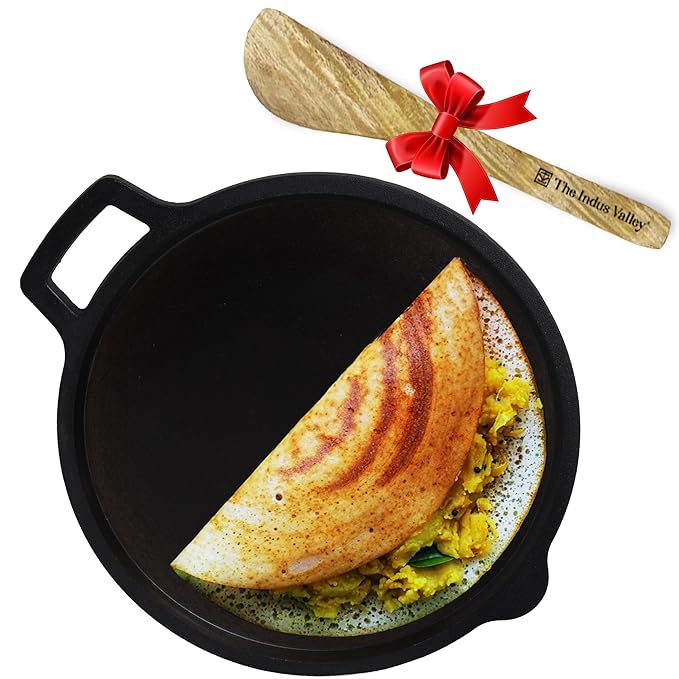
Cast iron tawas have a reputation for needing serious pre-seasoning before they’re actually usable, and this one is specifically built to skip most of that — pre-seasoned and smoothed at the factory so you’re closer to cooking-ready from the first use rather than weeks of oil-and-heat cycling.
It comes with a free accessory bundle in most listings, a nice bonus, but the core appeal is simple: proper cast iron heat retention for even roti and dosa cooking, with less of the traditional break-in effort.
Best for: Households wanting a genuine cast iron tawa without the usual seasoning hassle out of the box.
- 👍 Pre-seasoned, smoother out-of-box experience than typical cast iron
- 👍 Excellent heat retention for even roti and dosa cooking
- 👍 Naturally becomes more non-stick with regular use
- 👍 Works on gas, induction and other cooktops
- 👎 Still needs proper drying and occasional oiling to avoid rust
- 👎 Heavier than non-stick alternatives
- 👎 Requires a learning curve if you’ve never used cast iron before
SOLARA Cast Iron Tawa — the well-reviewed alternative
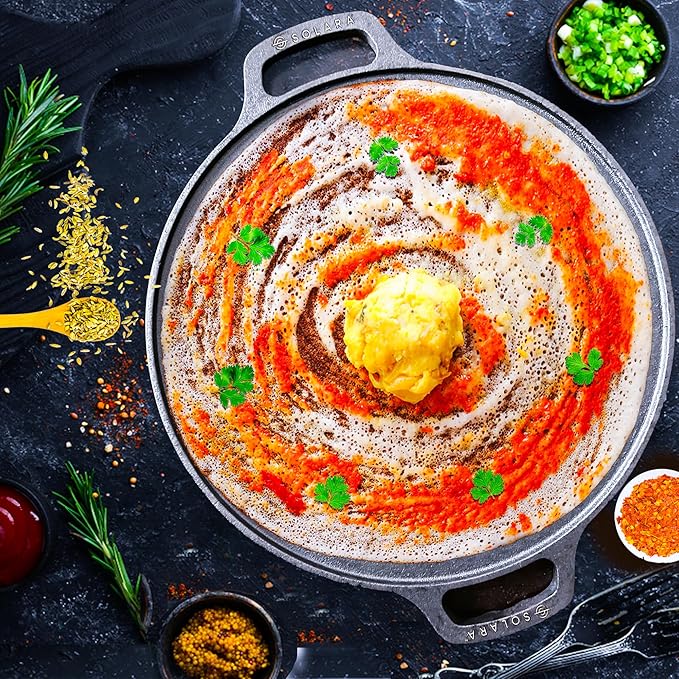
SOLARA’s tawa sits in the same pre-seasoned cast iron category as the Indus Valley option above, at a comparable price, making the choice between them mostly about size and personal brand preference — this one runs 12 inches, giving slightly more cooking surface for larger rotis or cooking multiple pieces at once.
It’s earned a strong review base specifically for consistent heat distribution, which is the one thing that actually separates a good tawa from a mediocre one regardless of brand.
Best for: Buyers comparing cast iron tawa brands who want a slightly larger 12-inch size.
- 👍 Larger 12-inch surface than many competing tawas
- 👍 Pre-seasoned, ready for near-immediate use
- 👍 Strong reviews specifically for even heat distribution
- 👍 Comparable pricing to other quality cast iron tawas
- 👎 Larger size needs more storage space and stovetop room
- 👎 Same cast iron maintenance needs as any tawa in this material
- 👎 Heavier to handle than a non-stick equivalent
Lifelong Non-Stick Frying Kadai — the everyday cooking pick
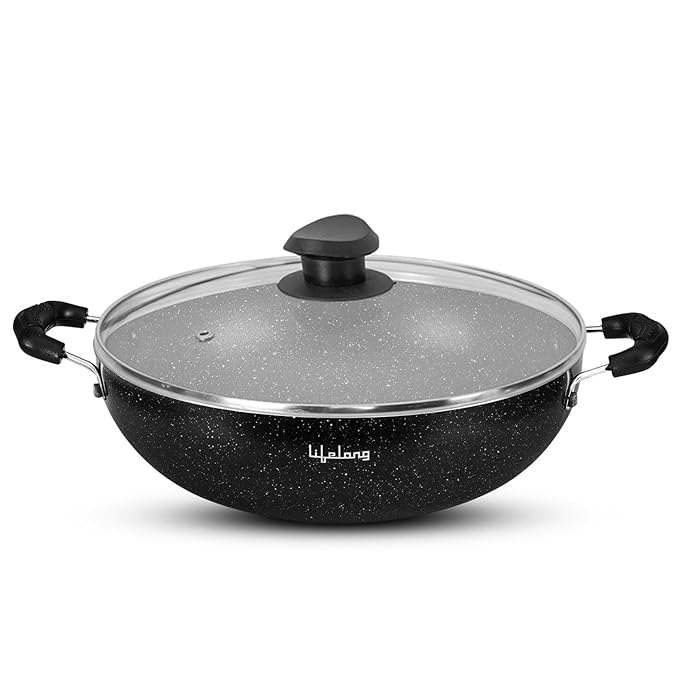
This is the cookware most people actually reach for every day — a non-stick kadai that needs minimal oil, cleans up in seconds, and comes with a glass lid so you can check on simmering curries without losing heat. At 2.5 litres and 26cm, it’s sized for regular family cooking without being unwieldy.
Non-stick isn’t a forever material — expect to replace it every few years as the coating naturally wears — but for the price and daily convenience, it’s the easiest cookware in this list to live with.
Best for: Daily curries, frying, and low-oil cooking without the maintenance cast iron or steel demand.
- 👍 Genuinely low-oil cooking thanks to the non-stick coating
- 👍 Glass lid lets you monitor cooking without losing heat
- 👍 Easiest of these four to clean daily
- 👍 Affordable and sized well for family cooking
- 👎 Non-stick coating wears out over a few years of regular use
- 👎 Needs wooden or silicone utensils — metal ones damage the coating
- 👎 Not as long-lasting overall as cast iron or steel
Prestige Stainless Steel 2-Piece Set — the durable starter set
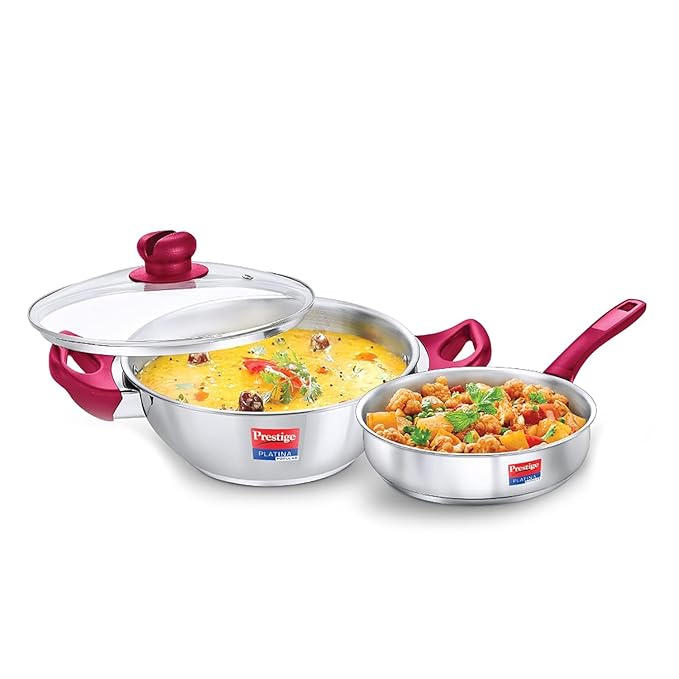
Stainless steel doesn’t get the daily-convenience credit that non-stick does, but it makes up for it in durability — no coating to wear out, ever, and it handles higher heat and metal utensils without a second thought. This Prestige set gives you two pieces to start a kitchen or add to an existing one.
It needs slightly more technique than non-stick — enough oil and proper preheating to avoid sticking — but for anyone planning to keep their cookware for a decade rather than replacing it every few years, it’s the more sensible long-term investment.
Best for: Setting up a new kitchen, or anyone wanting genuinely long-lasting cookware over easy-release convenience.
- 👍 Genuinely durable — no non-stick coating to eventually wear out
- 👍 Handles metal utensils and high heat without damage
- 👍 Trusted Prestige brand with wide availability
- 👍 Good value as a 2-piece starter set
- 👎 Needs more oil and technique to avoid food sticking
- 👎 Doesn’t offer non-stick’s easy-release convenience
- 👎 Requires slightly more attentive cooking than a non-stick pan
Frequently Asked Questions
Is cast iron or non-stick better for a tawa?
Cast iron, like the Indus Valley or SOLARA tawas here, retains heat better for even roti and dosa cooking and lasts far longer, but needs seasoning and careful drying to avoid rust. Non-stick is more convenient day-to-day but the coating wears out over a few years.
How do I season a cast iron tawa?
Both tawas in this list come pre-seasoned, which reduces the initial effort — but ongoing seasoning simply means cooking with a bit of oil regularly and drying it immediately after washing rather than letting it air-dry wet, which prevents rust and builds up the natural non-stick surface over time.
How long does non-stick cookware actually last?
Typically 2-4 years of regular use before the coating noticeably degrades, even with proper care like using wooden or silicone utensils on a kadai such as the Lifelong here. Using metal utensils or high heat consistently shortens that further.
Is stainless steel cookware harder to cook with than non-stick?
It needs a bit more technique — proper preheating and enough oil to prevent sticking — but it’s not genuinely difficult, and the trade-off is cookware like the Prestige set here that will outlast several rounds of replacement non-stick pans.
Can I use cast iron cookware on an induction cooktop?
Yes — cast iron is naturally magnetic and works on induction cooktops without any special base, unlike some aluminium cookware which needs an induction-compatible bottom layer to work at all.
What’s the difference between a tawa and a kadai?
A tawa, like the two cast iron ones here, is a flat or slightly concave pan for rotis, dosas and parathas. A kadai, like the Lifelong non-stick one, is a deep, rounded pan built for curries, deep-frying and dishes that need more depth than a flat surface allows.
The bottom line
For roti and dosa cooking, either the Indus Valley or SOLARA cast iron tawa is a genuinely good long-term investment — pick based on size preference. For daily curries and low-oil frying, the Lifelong non-stick kadai is the easiest to live with. And if you’re building a kitchen for the long haul, the Prestige stainless steel set trades a little convenience for cookware that will outlast several non-stick replacements.
As an Amazon Associate we earn from qualifying purchases — at no extra cost to you. We don’t print prices or ratings here because they change daily; tap through to Amazon for the current price and latest reviews.