Best Sewing Machines in India: Portable Mini to Automatic Zig-Zag
Sewing machine needs vary hugely — a student wanting to hem a pair of jeans has completely different requirements from someone tailoring garments regularly at home. This roundup covers that whole range: a genuinely portable mini machine for occasional light use, two straight-stitch machines from established brands, and a fuller automatic zig-zag machine for more serious, varied stitching.
Straight-stitch vs. zig-zag capability is the single biggest functional difference here, covered properly in the buying guide below, since it directly determines what kinds of fabric and stitching techniques a machine can actually handle.
None of these need professional tailoring experience to use — all come with basic guides, though the more advanced automatic machine has a genuinely steeper learning curve to use its full feature set.
How to pick the right sewing machine
Four things that matter more than the machine’s overall size or price tag.
- Straight-stitch-only machines handle basic hemming and simple stitching well, but zig-zag adds real versatility. Zig-zag stitching handles stretchy fabrics, buttonholes, and decorative stitching that a straight-stitch-only machine simply can’t do.
- Portable mini machines are genuinely useful for light, occasional repairs, not serious tailoring. If you’re hemming pants a few times a year rather than sewing garments regularly, a compact mini machine avoids overspending on features you won’t use.
- Automatic stitch-pattern machines reduce manual technique needs but come with a learning curve of their own. More stitch patterns and automation genuinely expand what you can make, but expect to spend time learning the machine’s specific controls and settings.
- Metal internal parts generally outlast plastic ones under regular heavy use. If you’ll use your machine often, checking build material matters more than the number of stitch patterns advertised.
The best sewing machines you can buy right now
Akiara Mini Electric — the portable occasional-use pick
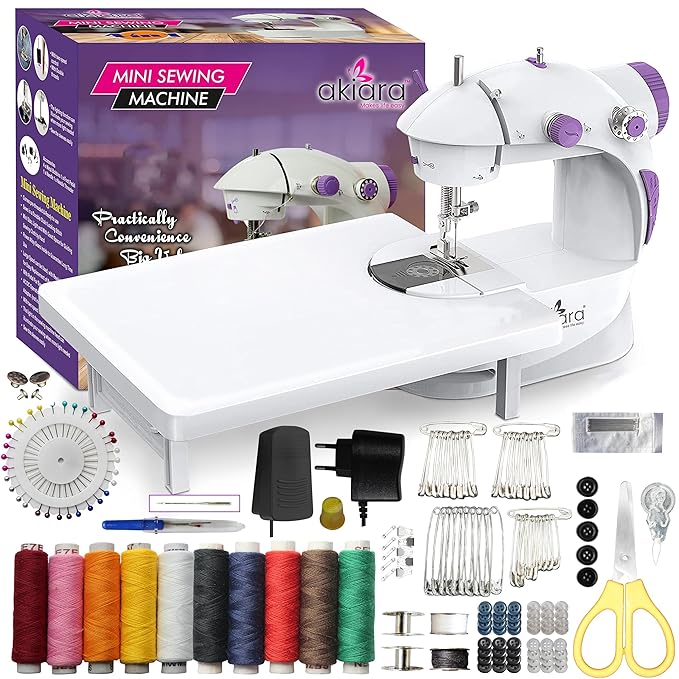
This is built for exactly the situation most households actually have — occasionally needing to hem pants, fix a tear, or adjust a garment, not regular serious tailoring. Its compact, portable design means it can live in a drawer rather than taking up permanent counter space.
It won’t handle the range of fabrics or stitch patterns a full-size machine manages, but for its specific, narrow job, it’s an accessible, affordable entry point that a lot of buyers have found genuinely useful.
Best for: Light, occasional repairs and hemming without committing to a full-size machine.
- 👍 Genuinely portable and easy to store
- 👍 Very affordable entry point
- 👍 Simple enough for occasional, light use without a learning curve
- 👍 Good value for infrequent repairs and hemming
- 👎 Limited stitch capability compared to full-size machines
- 👎 Not built for regular or heavy sewing use
- 👎 Smaller motor means slower going through thicker fabric
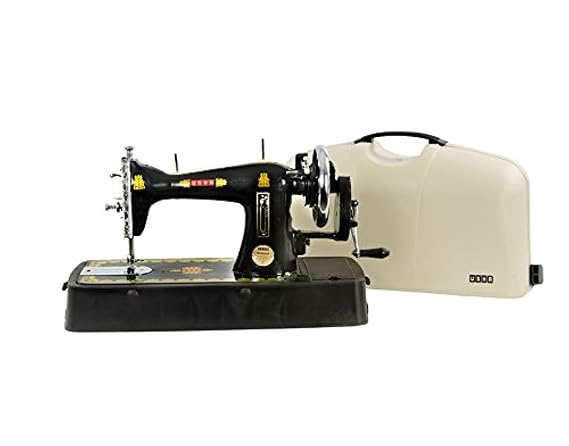
Usha Umang Straight Stitch — the established basic pick
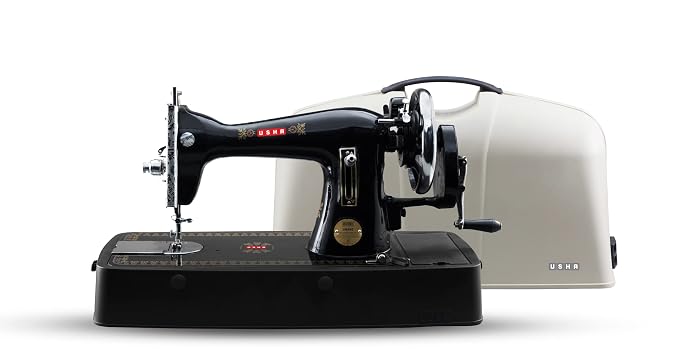
Usha has been a household name in Indian sewing machines for decades, and the Umang keeps things simple with reliable straight-stitch functionality at an accessible price. It’s the machine many people grew up seeing in a family home, built for dependable basic use.
Being straight-stitch only, it won’t handle stretchy fabrics or decorative stitching, but for everyday hemming, simple garment repairs and straightforward projects, it does the job without complication.
Best for: Straightforward hemming and basic sewing from a long-established Indian brand.
- 👍 Long-established, trusted Usha brand reputation
- 👍 Reliable straight-stitch performance
- 👍 Accessible pricing for a full-size machine
- 👍 Simple to learn and operate
- 👎 Straight-stitch only — no zig-zag for stretchy fabrics or buttonholes
- 👎 Basic feature set compared to the automatic Usha Janome option
- 👎 Less portable than the Akiara mini machine
SINGER Tailor Mate — the free-arm straight stitch alternative
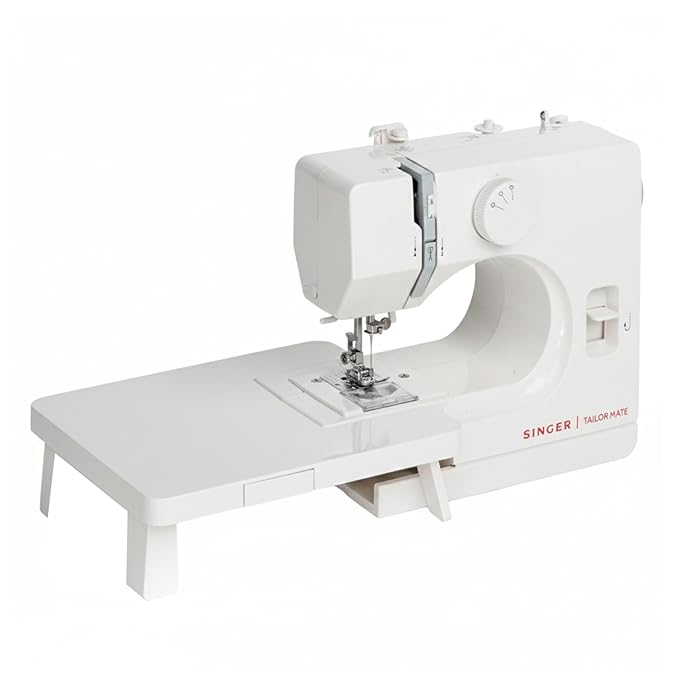
SINGER’s name is practically synonymous with sewing machines worldwide, and this Tailor Mate model brings that heritage with a free-arm design — genuinely useful for sewing cuffs, sleeves and other tubular sections that are awkward on a flat-bed machine.
Its enormous review base reflects widespread adoption in Indian households, and the built-in LED light is a small but appreciated detail for sewing in dimmer rooms or evening use.
Best for: Buyers wanting SINGER’s global sewing machine heritage with a genuinely useful free-arm design.
- 👍 Free-arm design genuinely helps with cuffs and sleeves
- 👍 SINGER’s global sewing machine heritage and reputation
- 👍 Built-in LED light for better visibility while sewing
- 👍 Very large, established review base
- 👎 Also straight-stitch only, same limitation as the Usha Umang
- 👎 Bulkier than the portable Akiara mini machine
- 👎 No automatic stitch-pattern variety of the premium Usha Janome
Akiara 12-Stitch Electric — the mid-range pattern variety pick
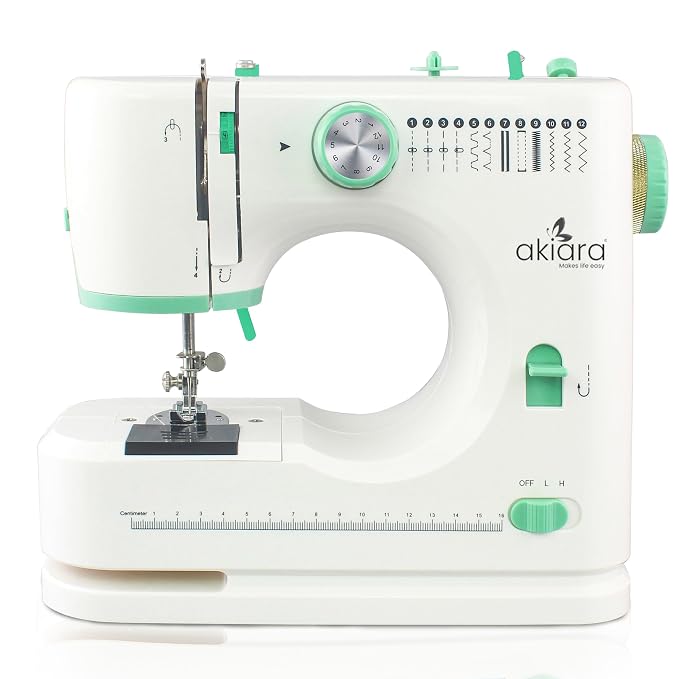
This sits between the basic straight-stitch machines and the fully automatic Usha Janome below — 12 different stitch patterns give real variety for decorative and functional stitching beyond plain straight lines, at a price still well below premium automatic machines.
It’s a sensible middle-ground pick for anyone who’s outgrown a basic machine’s limitations but doesn’t need the full automation and price of a top-tier model.
Best for: Buyers wanting more stitch variety than a basic straight-stitch machine without paying for a premium automatic model.
- 👍 12 stitch patterns offer real variety over basic straight-stitch machines
- 👍 Priced well below premium automatic alternatives
- 👍 Same accessible Akiara brand as the portable mini option
- 👍 Good middle ground for growing sewing skills
- 👎 Not as fully automated as the Usha Janome Dream Stitch
- 👎 Newer, smaller brand reputation than Usha or SINGER
- 👎 Learning to use 12 patterns effectively takes some practice
Usha Janome Dream Stitch — the premium automatic pick
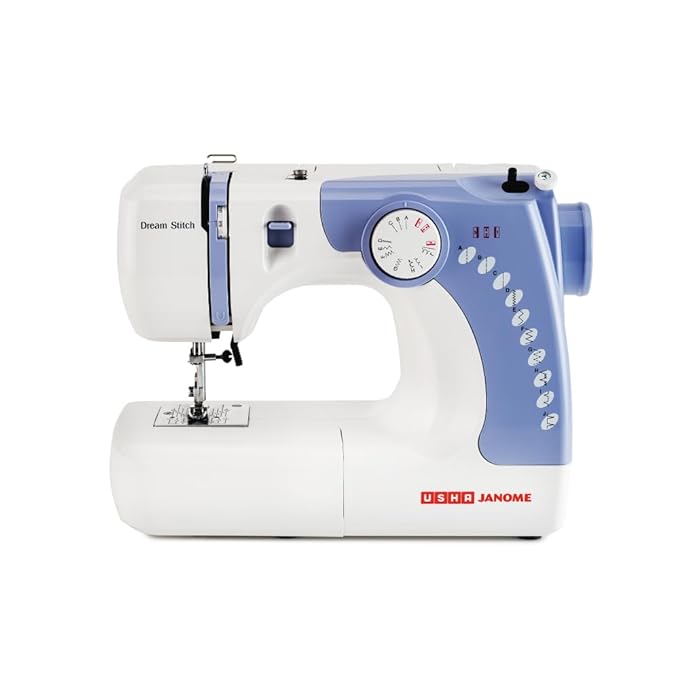
This is the machine for genuinely regular sewing — automatic zig-zag capability handles stretchy fabrics, buttonholes and decorative stitching that none of the straight-stitch-only machines in this list can manage. Usha’s partnership with Janome, a globally respected sewing machine brand, backs up the engineering quality.
Its very strong review base and rating reflect genuine satisfaction at this premium tier, making it worth the higher price if you’re sewing often enough to actually use its expanded capabilities regularly.
Best for: Serious, regular sewing needing zig-zag capability and full automatic functionality.
- 👍 Automatic zig-zag handles stretchy fabrics and buttonholes properly
- 👍 Usha-Janome partnership brings genuine engineering credibility
- 👍 Extremely strong review base and rating
- 👍 Best suited to serious, varied sewing projects
- 👎 The most expensive machine in this roundup
- 👎 Overkill if you only need occasional basic hemming
- 👎 More features mean a longer learning curve to use fully
Frequently Asked Questions
Do I need a zig-zag sewing machine, or is straight-stitch enough?
For basic hemming and simple repairs, straight-stitch machines like the Usha Umang or SINGER Tailor Mate are perfectly sufficient. If you’ll work with stretchy fabrics, need buttonholes, or want decorative stitching, the automatic zig-zag Usha Janome Dream Stitch is genuinely necessary.
Is a portable mini sewing machine good enough for regular use?
The Akiara Mini is built for light, occasional repairs rather than regular sewing — for frequent or heavier use, a full-size machine like the Usha Umang or SINGER Tailor Mate will hold up better and offer more capability.
What does a free-arm design actually help with?
A free-arm, like on the SINGER Tailor Mate, lets you slide tubular garment sections — cuffs, sleeves, trouser legs — around the narrow arm for easier stitching, something that’s awkward to manage on a flat-bed-only machine.
How many stitch patterns do I actually need?
For basic hemming, straight-stitch alone (like the Usha Umang) covers most needs. For more varied sewing, the Akiara 12-Stitch offers a solid middle ground, while the Usha Janome Dream Stitch‘s full automatic zig-zag capability suits the most serious, varied sewing projects.
Is Usha or SINGER better for a first sewing machine?
Both are long-established, trusted brands in India with comparable basic straight-stitch models — the Usha Umang and SINGER Tailor Mate are closely matched, so the choice often comes down to which specific feature (like the SINGER’s free-arm) matters more to you.
Do sewing machines need regular maintenance?
Yes — basic maintenance like cleaning lint from the bobbin area and occasional oiling keeps any machine, from the Akiara Mini to the Usha Janome, running smoothly over years of use. More heavily used machines benefit from more frequent attention.
The bottom line
For occasional light repairs, the Akiara Mini is an affordable, portable starting point. For dependable basic sewing, either the Usha Umang or SINGER Tailor Mate serves well — the SINGER’s free-arm design edges ahead for cuffs and sleeves. Want more stitch variety without the premium price? The Akiara 12-Stitch is the sensible middle ground. And for serious, regular sewing needing real versatility, the Usha Janome Dream Stitch is worth the investment.
As an Amazon Associate we earn from qualifying purchases — at no extra cost to you. We don’t print prices or ratings here because they change daily; tap through to Amazon for the current price and latest reviews.