Best Philips Avent Baby Feeding Bottles in India
Philips Avent’s Natural bottle has one of the largest review counts of any baby product on Amazon.in, and that scale of trust extends across a genuinely complete feeding ecosystem — not just bottles, but replacement teats, anti-colic designs, transition sippy cups and pacifiers that all work together as a baby grows through different feeding stages.
This roundup treats it as a full system rather than just picking one bottle: the flagship Natural bottle, the specialised Anti-Colic design, a replacement teat set (since teats wear out faster than bottles), a spout cup for the sippy-cup transition stage, a pacifier, and a more budget-friendly bottle line for anyone building out multiples without paying the premium price on every single bottle.
How to Pick the Right Avent Feeding Products
- Natural vs Anti-Colic bottles solve different problems. The Natural line focuses on a breast-like latch shape; the Anti-Colic design specifically targets reducing air intake and gas discomfort — pick based on whether latch comfort or colic/gas is your baby’s bigger issue.
- Teats wear out faster than the bottle body. Buying replacement teats separately, rather than a whole new bottle, is the more economical way to keep feeding bottles in rotation as teats age or as your baby needs a different flow rate.
- Flow rate on teats should match your baby’s age, not just be swapped randomly. A teat with too fast a flow can cause choking risk in younger babies; too slow can frustrate an older baby who’s used to feeding more efficiently.
- Spout cups are for the transition stage after bottles, not a bottle replacement early on. Introducing a sippy cup too early, before your baby is developmentally ready, generally isn’t productive — check paediatric guidance on timing for your baby specifically.
- Budget bottle lines (like Avent Grow) still carry the anti-colic design at a lower price. If you need multiple bottles for a full daily rotation, mixing in the more economical line for some of them is a reasonable way to manage cost without giving up the anti-colic feature entirely.
6 Philips Avent Feeding Products Worth Buying
Philips Avent Natural Baby Feeding Bottle — Best Overall, Most Trusted
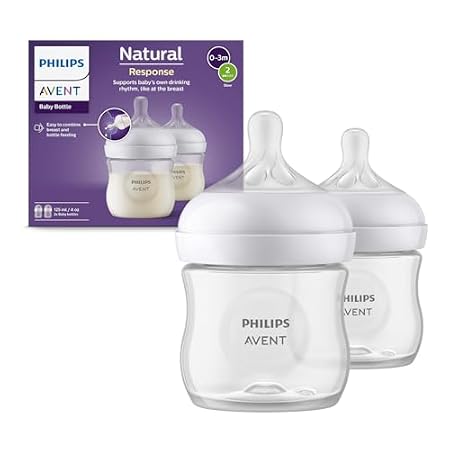
This carries one of the largest review counts of any baby product in this entire keyword bank — a genuinely massive scale of sustained trust. The Natural line’s wide, breast-shaped teat is designed to encourage a natural latch, which matters for babies who alternate between breast and bottle feeding.
Being the flagship, most popular line, it’s priced at a premium compared to the more budget-friendly Grow line below — worth it for the primary bottles in your rotation, less necessary if you’re stocking up on many bottles at once.
Best for: the default starting bottle for most babies
- 👍 Massive, industry-leading review base and rating
- 👍 Breast-shaped teat design supports babies who alternate breast and bottle feeding
- 👍 The clear default recommendation for most families
- 👎 Priced at a premium versus the more budget-friendly Avent Grow line
- 👎 Same core design as the Anti-Colic line without its specific gas-reduction focus
Philips Avent Anti-Colic Feeding Bottle — Best for Gas and Colic Concerns
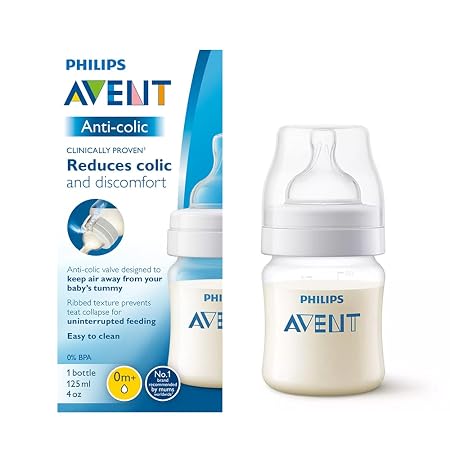
This is specifically engineered to reduce air intake during feeding, which directly addresses gas and colic discomfort rather than just being a general-purpose bottle. Its large, well-established review base reflects genuine demand from parents dealing with this specific issue.
If your baby doesn’t show colic or gas symptoms, the Natural bottle’s latch-focused design may be the more relevant choice — the anti-colic engineering solves a specific problem rather than being a universal upgrade.
Best for: babies who show signs of gas discomfort or colic during feeding
- 👍 Specifically engineered to reduce air intake and gas discomfort
- 👍 Large, well-established review base
- 👍 Available in a useful 125ml size for younger babies
- 👎 Solves a specific gas/colic problem rather than being a universal upgrade
- 👎 Less focused on latch shape than the Natural line
Philips Avent Natural Response Bottle Teat — Best for Extending Bottle Life
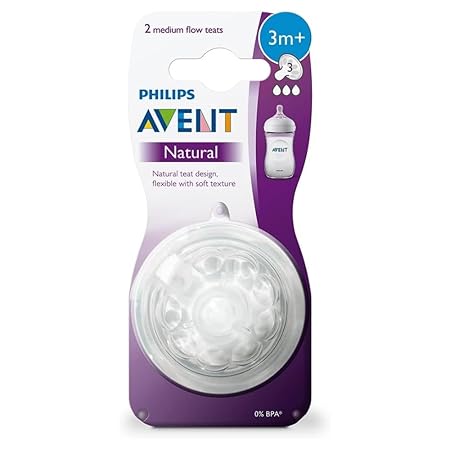
Teats wear out faster than the bottle body itself, and buying replacement teats separately is the more economical way to keep your existing bottles in good working order. This 2-pack gives you spares on hand, which matters given how frequently teats need replacing with daily use.
Teats come in different flow rates matched to age — make sure you’re buying the correct flow rate for your baby’s current stage rather than assuming any teat fits any bottle equally well.
Best for: replacing worn teats without buying whole new bottles
- 👍 Extends the life of existing bottles without a full replacement purchase
- 👍 Large, well-established review base
- 👍 Genuinely more economical than replacing whole bottles
- 👎 Must match the correct flow rate to your baby’s age — not interchangeable across stages
- 👎 Only compatible with Avent-style bottle bodies
Philips Avent Classic Spout Cup — Best for the Sippy Cup Transition
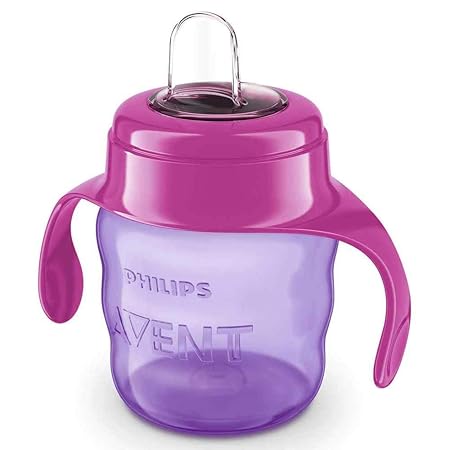
This is a genuinely different product from the bottles above — a transition cup with a handle and spout, designed for the stage after bottle feeding when your baby is learning to drink independently. Its large review base reflects how commonly this specific transition product gets used across Avent’s customer base.
It’s not meant to replace a bottle for younger babies — introducing it too early, before developmental readiness, generally isn’t productive, so timing matters more than jumping to it as soon as possible.
Best for: the transition stage after your baby outgrows bottle feeding
- 👍 Genuine transition product distinct from bottle feeding
- 👍 Handle design helps babies learn to hold and drink independently
- 👍 Large, well-established review base
- 👎 Not a bottle replacement for younger babies still bottle-feeding
- 👎 Timing of introduction matters — too early isn’t necessarily beneficial
Philips Avent Ultra Air Pacifier — Best for Soothing Between Feeds
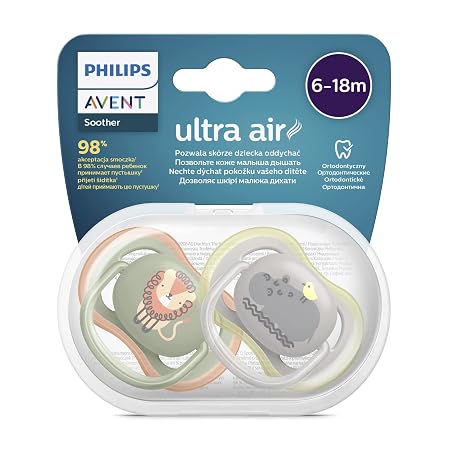
This rounds out the feeding-adjacent side of the Avent range — a pacifier with high ventilation design, meant to soothe without introducing the overfeeding risk that comes from using a bottle as a comfort tool. Its solid review base backs up consistent satisfaction with the ventilation design specifically.
Pacifier use and timing is a matter of personal and paediatric guidance — some parents and doctors have specific views on introduction timing and weaning, worth considering alongside the product itself.
Best for: soothing your baby between feeds without the risk of overfeeding
- 👍 High-ventilation design distinct from basic pacifiers
- 👍 Pack of 2 gives a useful spare
- 👍 Solid, well-established review base
- 👎 Pacifier use/timing is a matter of personal and paediatric guidance, not just product choice
- 👎 Doesn’t address feeding directly — a soothing tool, not a bottle replacement
Philips Avent Grow Economy Feeding Bottles — Best Budget-Friendly Option
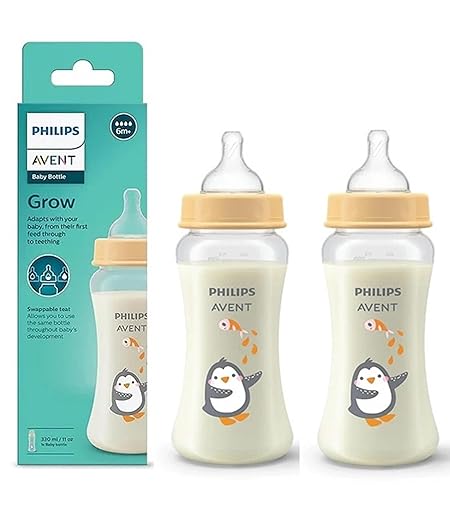
This gives budget-conscious parents an anti-colic Avent bottle at a lower price than the flagship Natural or dedicated Anti-Colic lines — genuinely useful if you need several bottles in daily rotation and don’t want to pay premium pricing on every single one. It still carries the anti-colic design principle, just at a more accessible price point.
Its rating trails the flagship lines somewhat, and its review base, while decent, is smaller than the more established Natural and Anti-Colic bottles — a real value option, just not the top-rated choice in the range.
Best for: building out a full daily bottle rotation without paying premium pricing on every bottle
- 👍 More accessible price point while still keeping the anti-colic design
- 👍 Practical for building a full daily bottle rotation economically
- 👍 Genuine Avent quality at a lower cost per bottle
- 👎 Rating trails the flagship Natural and dedicated Anti-Colic lines
- 👎 Smaller review base than Avent’s most established bottle lines
Frequently Asked Questions
Should I buy the Natural or Anti-Colic Avent bottle?
The Natural bottle focuses on a breast-like latch shape, good for babies alternating breast and bottle feeding. The Anti-Colic bottle specifically targets reducing air intake for babies showing gas or colic discomfort — pick based on which issue is more relevant to your baby.
How often do Avent bottle teats need replacing?
Teats wear out faster than the bottle body itself with daily use — buying a replacement teat pack like the Natural Response 2-pack is more economical than replacing the whole bottle.
When should I introduce a spout cup like the Avent Classic?
It’s meant for the transition stage after bottle feeding, once your baby is developmentally ready to start drinking more independently — introducing it too early generally isn’t productive, so check paediatric guidance for timing specific to your baby.
Is the Avent Grow Economy bottle as good as the Natural bottle?
It still carries the anti-colic design principle at a lower price, making it a reasonable choice for building out a full bottle rotation economically, though its rating trails the flagship Natural and Anti-Colic lines slightly.
Do I need to match teat flow rate to my baby’s age?
Yes — a teat with too fast a flow can pose a choking risk for younger babies, while too slow a flow can frustrate an older baby. Always check the flow rate is appropriate for your baby’s current stage.
Are Avent pacifiers safe to use between feeds?
The Ultra Air Pacifier’s high-ventilation design is built for safe soothing use, but pacifier introduction and weaning timing is a matter of personal and paediatric guidance worth considering alongside the product itself.
Which Philips Avent Products Should You Buy?
For most babies, the Natural Baby Feeding Bottle is the safest, most trusted starting point. If gas or colic is a specific concern, the Anti-Colic bottle is worth the switch, and keep a pack of Natural Response Teats on hand to extend the life of your existing bottles. As your baby grows, the Classic Spout Cup supports the transition to independent drinking, and the Ultra Air Pacifier helps with soothing between feeds. If you need to stock up on multiple bottles economically, the Avent Grow Economy line keeps the anti-colic design at a more accessible price.
As an Amazon Associate we earn from qualifying purchases — at no extra cost to you. We don’t print prices or ratings here because they change daily; tap through to Amazon for the current price and latest reviews.